


Producers and other players in the agricultural sector will know that local and international maize prices fluctuate continuously. This is due to a combination of factors, such as dynamic market conditions, weather and climate changes, and geopolitical events.
The grain market is always subject to deviations. Some years maize trades at an import parity, while other years it trades at an export parity, which has a huge impact on farms. At the moment, grain prices are low, and while lower prices bring relief to consumers who are battling high grocery bills, rising diesel and petrol prices and more – especially due to the current conflict between the USA, Israel and Iran – it places increasing pressure on producers having to accommodate rising input costs in order to eke out a living.
Here, implementing value adding measures like milling can play an important role to ensure producers’ survival and success.
In this blog, we look at how Roff client, Josua Pietersen from Idlani Milling & Farming in the North-West, goes about it using the Roff R-70 Maize Mill to keep his business and profit margins in the black.
Value adding creates additional revenue streams and certainty in uncertain times
There are various ways in which producers can implement value adding practices.
Producers may invest in their own maize mills and mill, package and market maize meal themselves to boost their income and profits, while others also produce grits which can be used in a variety of food products like snacks. Maize germ and bran, by-products of the milling process, can also be sold to feedlots or used by the producer himself as animal feed.
 But the full processing process goes much further than the milling step. It starts with the correct storage of raw maize to prevent moisture quality issues, followed by a cleaning process where impurities like stalks, dust and broken kernels are removed. Next is conditioning: the process that sees the maize’s moisture percentage adapted for optimal extraction. Only then can the degermination, milling and sifting steps take place, followed by packaging and eventual distribution of the end-product. Each step influences the final quality that ends up in-store.
The Idlani Super Maize Meal story
To prevent uncontrollable maize price fluctuations from negatively affecting his business, Josua Pietersen from Idlani Milling & Farming invested in his own maize milling plant. He has been producing maize meal under the Idlani Super Maize Meal brand since 2017 – a popular product with many loyal supporters (Idlani means “let us eat” in Zulu).
By producing his own maize meal, Josua can add the highest possible value to his product and optimise his farm’s profitability. Apart from maize meal, Josua also sells maize germ and brand to a third party, and the farm uses 30% in its own feedlot. “This is a further source of income generated by the mill and while it’s not our primary focus, it’s good to know that no part of the product goes to waste during the process,” says Josua.
The team also mills grits for their own maize snack line, which is a recent addition to the business venture. 
Eliminate the risks yourself
“We eliminated a considerable business risk by investing in our own plant, and the quality of our product is excellent,” says Josua.
“I quickly learnt that the end user is extremely loyal to a specific brand and insists on quality. As such, it was a big priority for us to establish quality, a competitive pricing structure, and brand activation in our market – which can be difficult for any new entrepreneur. Of course, the maize price brings its own set of challenges depending on how high or low it is during a given year,” he says.
Choose the right mill from day one
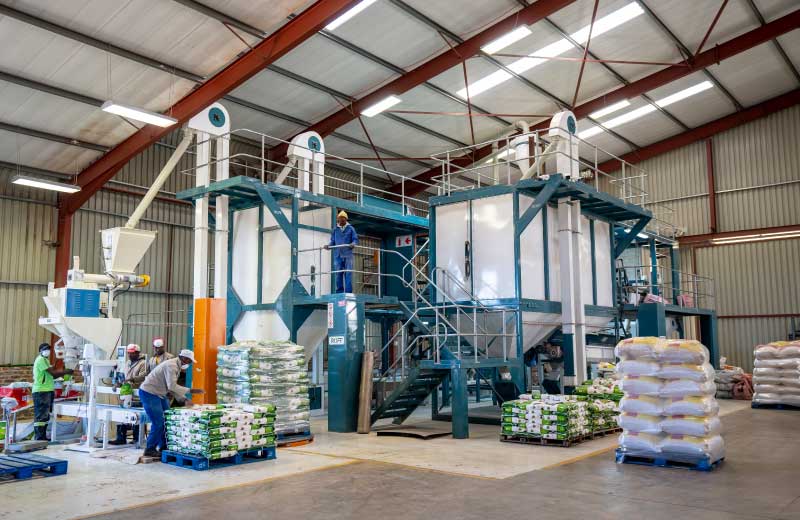
Initially Josua and his fellow director Johan Pietersen invested in a Roff R-70 plant with a 4 ton per hour capacity. Thanks to a growing demand for their product, Idlani recently had to upgrade to a second R-70 mill which increases their total capacity to 8 tons per hour.
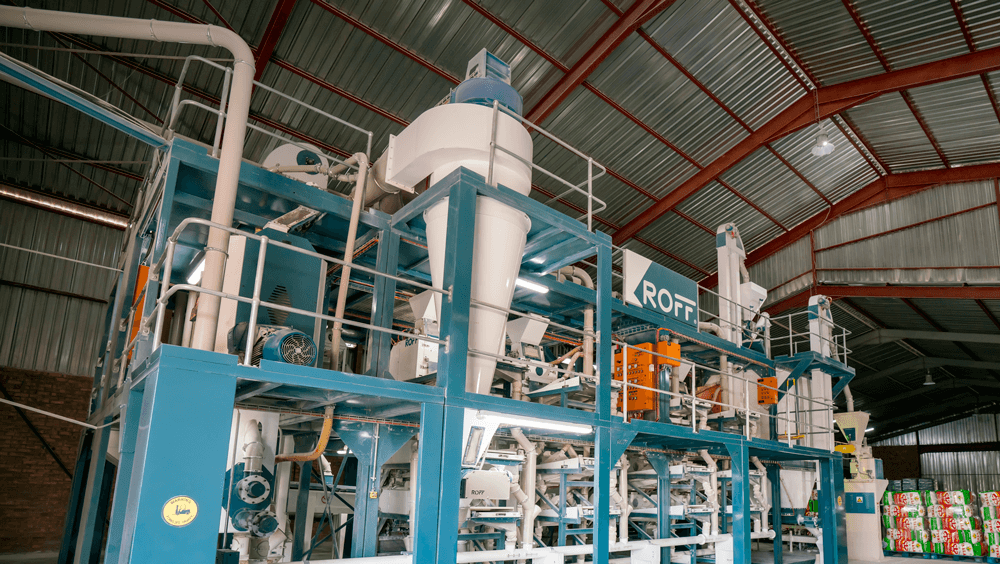
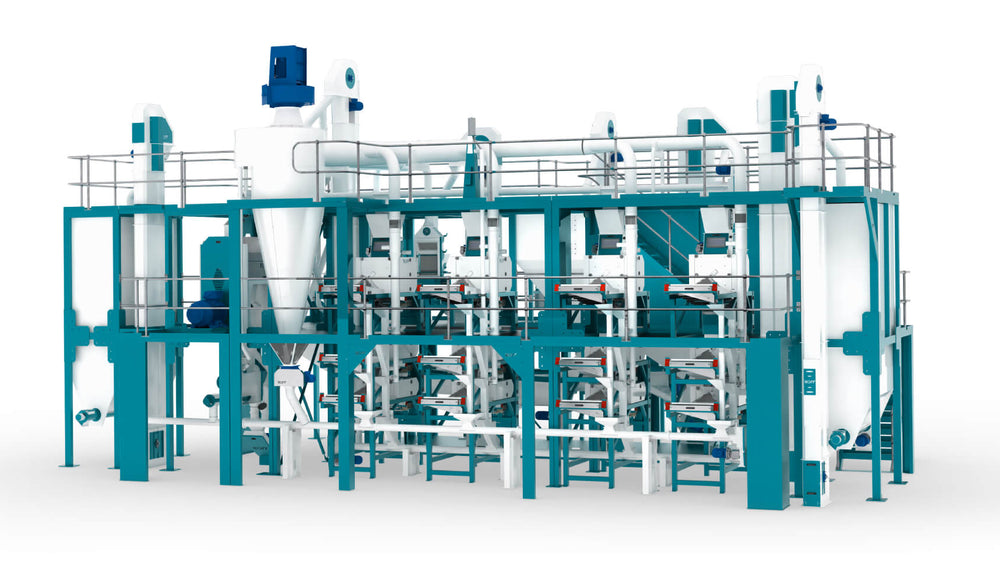
 The R-70 is a compact maize mill which is installed across two stories on an enclosed framework, and which has been designed especially for the maize milling entrepreneur. With a milling capacity of 4 to 5 tons per hour – or 50 to 120 tons per day, depending on the configuration – and an extraction rate of 70 tot 74% for super maize meal (above the industry standard of 65 to 70%), it’s a trusted workhorse with more than 80 plants operational across Africa since 2012. The footprint of only 14m x 9m means that an existing barn can be repurposed in many cases; if the roof is too low, it usually only takes a simple and affordable adjustment to raise it.
Roff offers the full package: the mill, electric panel boards, installation, set-up and training. Together with low dust levels and economical power consumption, it means that a producer could start milling and marketing within weeks of delivery.
“The plant has low maintenance costs, compact design and excellent extraction rates – huge bonuses for our business,” says Josua.
Since a mill is a considerable capital expense, Josua and Johan highly recommend that any aspiring entrepreneur does his homework before deciding on a manufacturer. Choose one with a solid reputation in the industry as well as ample expertise, and who will provide support and advice long after the sale has been concluded.
What differentiates a good mill?
A maize mill’s value doesn’t only lie in its capacity, but also in the consistent quality of the product. Consumers judge a product within seconds on colour, texture and taste – and those qualities are largely determined at the mill. Critical aspects include:
- Efficient degermination and bran removal, which directly impacts the colour, shelf life and taste of the maize meal. A well designed degerminator, like the DGX Degerminator on the R-70, will cleanly remove the germ and bran from the endosperm without damaging the desired fractions.
- A high extraction rate which determines how much sellable meal can be extracted out of each ton of maize and therefore has a direct impact on the producer’s profit margin. Minor differences in extraction can add up over a year to considerable Rand amounts.
- Operating costs, especially electricity usage, is another important consideration. With the current Eskom tariffs, energy efficient roller mills and optimal performance per kilowatt hour are directly linked to profitability. A mill with low maintenance costs and minimal downtime protects margins during seasons where every Rand adds up.
- Roller accuracy, sieve precision and reliable vitamin and mineral enrichment complete the picture – these aspects all ensure the product’s regulatory adherence and consistent appearance and taste.
- Finally, simple operations and local support are often overlooked and underestimated. Modern tractors and implements become more complex with each passing year, and in many cases a producer or his mechanic can no longer do any work on it themselves – each adjustment requires a specialist with a laptop. A good maize mill should follow the opposite approach: anyone with good technical knowledge should be able to do day-to-day maintenance and minor adjustments without the need for a specialist qualification. Major services can still be handled by the manufacturer, but the operator should be able to continue independently in the meantime. Linked to this is the benefit of having a local manufacturer with parts that are made and in stock in South Africa – something that dramatically reduces downtime when a part must be replaced and protects the producer against the exchange rate and logistical risks that go hand in hand with imported equipment.

Advice to future entrepreneurs
Josua shares the following advice to other producers wanting to implement value adding projects:
“Start by doing thorough market research to determine whether your product can truly fill a gap in this highly competitive market. The current market environment is mainly dominated by a few big names with massive operations and well-established brands. But this shouldn’t scare off potential entrepreneurs. It’s of vital importances to implement competitive prices and strict quality measures in every step of the milling process to ensure that the quality of your product is never questioned. The maize meal’s colour, taste and texture say everything you need to know about the quality, and the end user knows this all too well.”
Idlani’s success is an inspiring example of what is possible when producers think out the box and embrace value adding practices to overcome maize price fluctuations.
Ready to build your own successful maize milling business?
Request a free consultation and take your first step towards partnering with Roff today.

3 comments
I can’t wait for you business cuose we are struggling with maize meal maize mael is a basic at home also samp ,cake flour but maize meal is very important for our family’s
Whats the price of a small sce roof maize milling machine
———
Roff Milling replied:
Hello, please have a look, our sales team got in touch via email. Kind Regards
Please,Iam a farmer, entrepreneur what is the price for small scale ROFF maize milling machine in us dollars?
———
Roff Milling replied:
Hello Samuel, our sales team has been in touch via email. Kind Regards