
Quality control plays an important role in every stage of the production of maize products, from intake to packing.
Large mills have fully equipped laboratories where routine quality checks are carried out. However, the small miller cannot afford to equip and run such a laboratory, and therefore needs an area in the mill where the simpler, basic tests can be carried out.
Next up, we take a look at the speck count and cooking tests.

THE SPECK COUNT
This is a very simple test which doesn’t require any expensive equipment, and which can be carried out in a few minutes.
Most customers want a white maize meal that’s free from black specks. They are likely to only buy a product once if it contains an excessive amount of specks. Black specks appear when the tip cap of the maize is not removed on the degerminator and ground up on the roller mill.

Test method
- A representative sample of the meal or grits is thoroughly mixed.
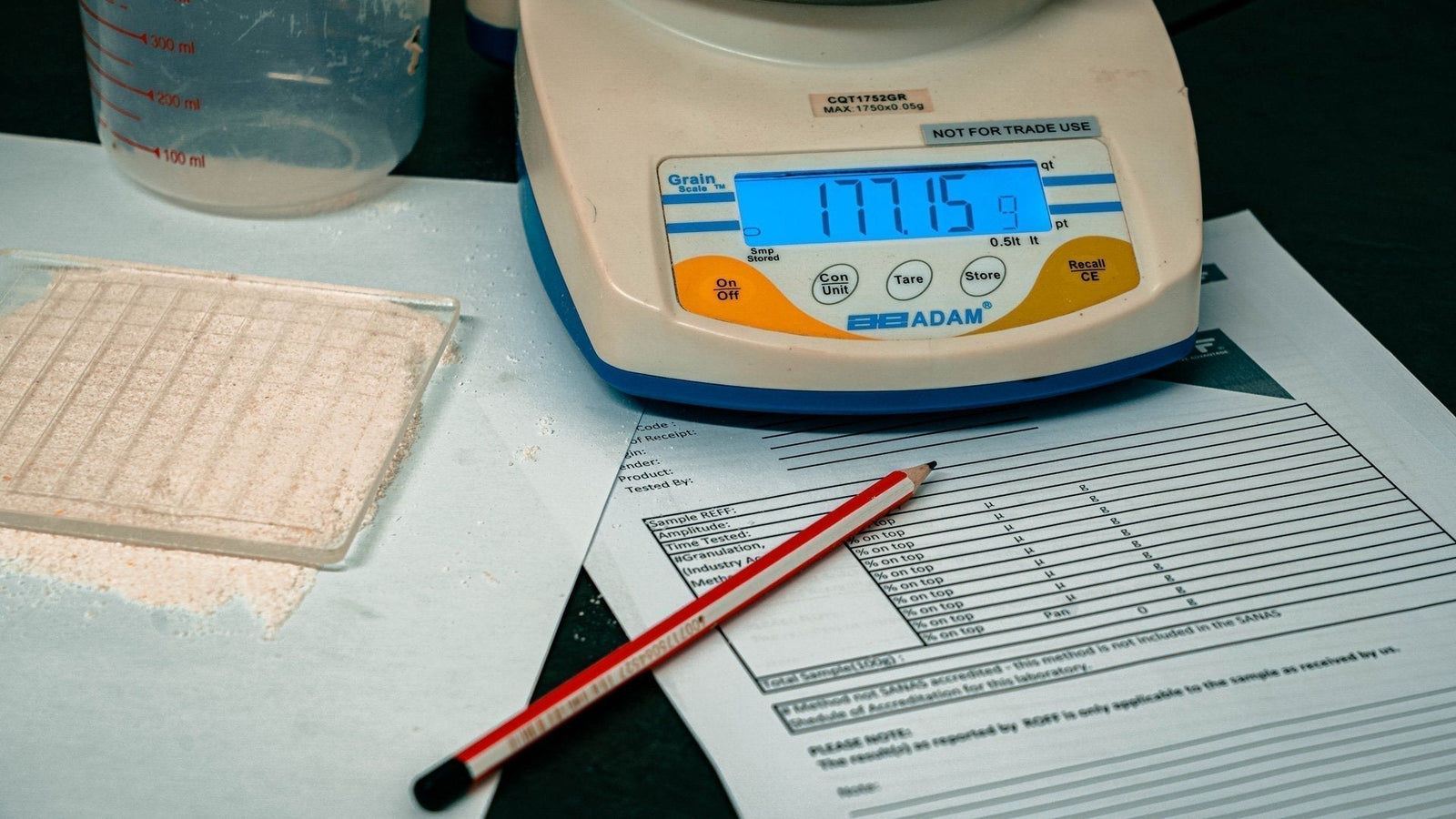
- It’s then compressed under a Perspex plate. The size of the plate is 10sq/cm; this has been further marked into squares of 1cm each.
- Count the dark/ black specks.
- The black specks counted under the entire plate represent the total specks for that product.

Frequency of test: At least every two hours.
The higher the grade of maize meal, the fewer specks should be present in the product. Super refined meal should have very few specks, while lower quality meal may have more. One should also compare the products made on the mill against those of one’s competitors, and always aim to exceed their quality.

COOKING TEST
Another simple test that doesn’t necessitate expensive equipment and has two applications:
- Different quality maize meal products are cooked, tested and qualities such as taste and texture are noted. Competitors’ products can be included for comparison purposes. Use a consistent recipe for the weight of meal, and the amount of water and salt that’s added.
Frequency of test: At least once a day, or at the very least once a week.
- It’s also a good test for samp quality. By cooking up the samp, any bran or germ particles, either loose or still attached to the endosperm, will cook up yellow. Good samp should have little or no bran/ germ attached, otherwise customers will reject it.
Frequency of test: At least once per shift when producing samp.