Updated April 2026
In 2022, we examined how Russia’s invasion of Ukraine disrupted Africa’s wheat supply, triggered fuel price hikes, and opened unexpected opportunities for local maize millers. Four years later the threats to Africa's food systems have intensified. Internal conflict, climate shocks, cascading Middle Eastern crises, and soaring logistics costs are now the leading challenges. Yet these pressures also reveal critical opportunities for Africa's millers and farmers.
Key Insight: Africa's food crisis is now driven by a dual threat: internal conflicts that directly destroy food systems, and Middle Eastern instability that disrupts the global supply chains Africa depends on.
Opportunity: Local maize and wheat milling is key to creating resilient, affordable food systems.
From global shocks to a dual crisis
Many African countries were heavily exposed to wheat and fertiliser disruptions from the Russia-Ukraine war, with dependency especially acute in some import-reliant markets. Prices soared, fertiliser became scarce, and transport costs surged. While some of these indicators have improved, food insecurity in Africa has worsened. That shift reveals a critical evolution: Africa's food crisis is no longer driven primarily by single-source global shocks like the Ukraine war, but by the convergence of internal conflicts that directly destroy local food systems and cascading Middle Eastern crises that disrupt the global supply chains—shipping routes and fertiliser imports—that Africa depends on. Both threats are intensifying simultaneously.
Internal conflicts destroying food systems
Conflict within African countries has become the single largest contributor to hunger. In Sudan, famine conditions have now been confirmed in seven areas including El Fasher (North Darfur) and Kadugli (South Kordofan), with nearly 25 million people — half the country's population — facing acute food insecurity as of early 2026. The civil war that erupted in April 2023 has displaced over 14 million people and pushed food prices up by as much as 300% in some regions. Agriculture has been systematically dismantled, with the RSF deliberately targeting farming communities across Darfur's most fertile land.
The Democratic Republic of Congo faces similar devastation, with millions displaced and maize flour prices rising as much as 37%. In the Sahel, violence and displacement threaten over 10 million people, while agricultural output in places like Niger and Mali has fallen sharply. Ethiopia, Somalia, and South Sudan all face soaring malnutrition rates, collapsed local markets, and disrupted aid delivery.
Conflict doesn’t just reduce food production — it severs supply chains, spikes prices, and cuts off access entirely.
Middle Eastern conflicts: A compounding crisis
While internal conflicts destroy food production within Africa, Middle Eastern conflicts are simultaneously strangling the global supply chains that Africa relies on for fertiliser and grain imports. Beyond Africa's borders, Middle Eastern conflicts are creating profound ripple effects across the continent. The situation is complex and interconnected, involving multiple theatres of conflict that are disrupting both food availability and affordability.
Gaza and humanitarian catastrophe
The Israel-Hamas war that began in October 2023 created devastating humanitarian conditions in Gaza, where famine was confirmed in parts of the territory in August 2025. Although increased humanitarian aid flows under a fragile ceasefire have provided some relief, the situation remains critical. As of early 2026, approximately 1.6 million people (77% of Gaza's population) face high levels of acute food insecurity, with over 100,000 people in catastrophic conditions.
While Gaza's crisis is primarily localised, its secondary effects have influenced regional grain markets. Middle Eastern grain buyers have shifted sourcing patterns, increasing demand from alternative suppliers including South Africa and Argentina, creating new export opportunities but also placing upward pressure on regional grain prices.
Red Sea shipping disruptions
Houthi attacks on commercial shipping in the Red Sea, which began in late 2023 in response to the Gaza conflict, have created one of the most significant maritime disruptions in modern history. By late 2025, container ship transits through the Suez Canal had plummeted by 90% compared to pre-crisis levels, with major shipping lines rerouting around Africa's Cape of Good Hope.
The cost impacts on Africa have been substantial:
- Freight costs have surged 200-400% on many routes
- East African cereal import costs increased
- Delivery times have extended by up to two weeks
- Several bulk carriers carrying fertiliser to Africa have been attacked and sunk, including the M/V Rubymar (21,000 tons) and M/V Magic Seas
Although a Houthi ceasefire was announced in late October 2025 tied to the Gaza peace deal, the shipping industry remains cautious. As of early 2026, most major carriers continue routing around the Cape of Good Hope, keeping costs elevated and supply chains strained.
Iran-US-Israel conflict and the Strait of Hormuz crisis
The most acute disruption emerged in late February 2026, when joint US-Israeli strikes against Iran triggered a major escalation. Iran's retaliatory closure of the Strait of Hormuz — through which roughly one-third of global fertiliser exports normally flow — has created severe supply chain shocks.
The fertiliser crisis is particularly severe for Africa:
- Urea prices surged 46% month-on-month between February and March 2026
- Approximately 30% of global exportable fertiliser supplies, including from Saudi Arabia, Qatar, and Bahrain, are currently unavailable
- Kenya, which imported 1.3 million bags of fertiliser under its subsidy program in 2025, faces significant uncertainty for its 2026/2027 agricultural season
- Ethiopia, which imports over 10.6 million quintals annually and relies on the Djibouti corridor for 95% of its trade, faces compounded logistics challenges
The World Food Programme estimates that Middle Eastern conflicts could push an additional 45 million people globally into acute hunger by mid-2026, with Africa particularly vulnerable given its dependence on fertiliser imports and maritime trade routes.
Humanitarian supply chains are experiencing disruptions comparable to the COVID-19 pandemic and the Ukraine war. The combination of Red Sea rerouting and Strait of Hormuz closure has created what the WFP describes as "some of the most severe disruption seen since COVID-19 and the war in Ukraine."
Other geopolitical developments with ripple effects
Political instability in the Sahel — especially the dissolution of ECOWAS ties by Mali, Burkina Faso, and Niger — is increasing intra-regional trade costs while also prompting greater interest in local milling investments. This political realignment is reshaping traditional trade corridors and creating both challenges and opportunities for regional food systems.

Structural barriers in African grain supply chains
High input costs remain a barrier, especially for fertiliser and fuel. The February-March 2026 fertiliser price surge driven by Middle Eastern conflict has reversed earlier price easing trends, creating renewed pressure on African farmers. Local access remains limited due to poor infrastructure and distribution bottlenecks. Poor transport, storage, packaging, and cold-chain gaps contribute significantly to food loss across African supply chains. Climate change is intensifying these problems, with extreme weather slashing yields and undermining farmer profitability. Adding to this, uneven price transmission means consumer prices don't fall as quickly as producer prices, disproportionately hurting the poorest households.
Opportunities for millers and farmers
Despite these challenges, the path forward is clear — and full of potential. Strengthening local production through climate-resilient seed varieties, expanded irrigation, and improved extension services is critical. Adoption of drought-tolerant maize and heat-resilient wheat has already boosted yields in countries like Ethiopia and could be replicated more broadly.
The current crisis underscores Africa's dangerous dependence on imported fertiliser. Promising initiatives are emerging: Ethiopia signed a $2.5 billion fertiliser plant deal with Nigeria's Dangote Group in August 2025; Angola's Opaia Group is developing a $2 billion plant backed by $1.4 billion from Afreximbank; and Ghana signed a $5 billion fertiliser deal with Qatar in 2025. These projects represent critical steps toward regional self-sufficiency, though success will depend on reliable gas supply, power infrastructure, and long-term offtake agreements.

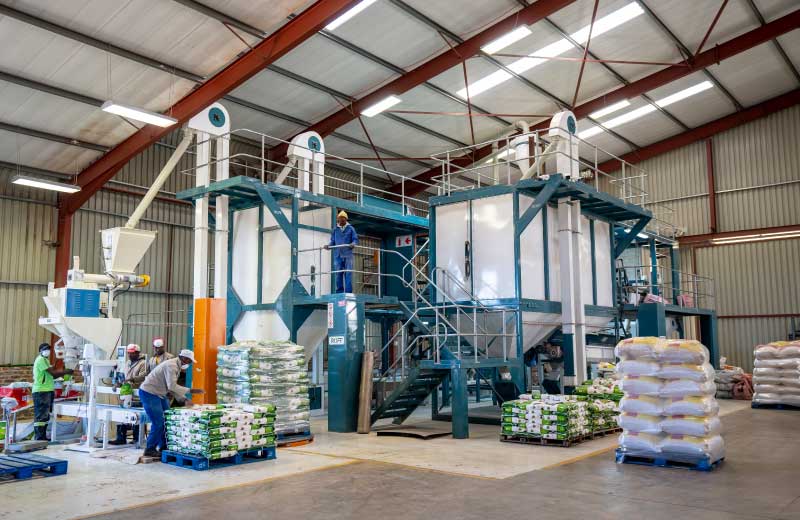
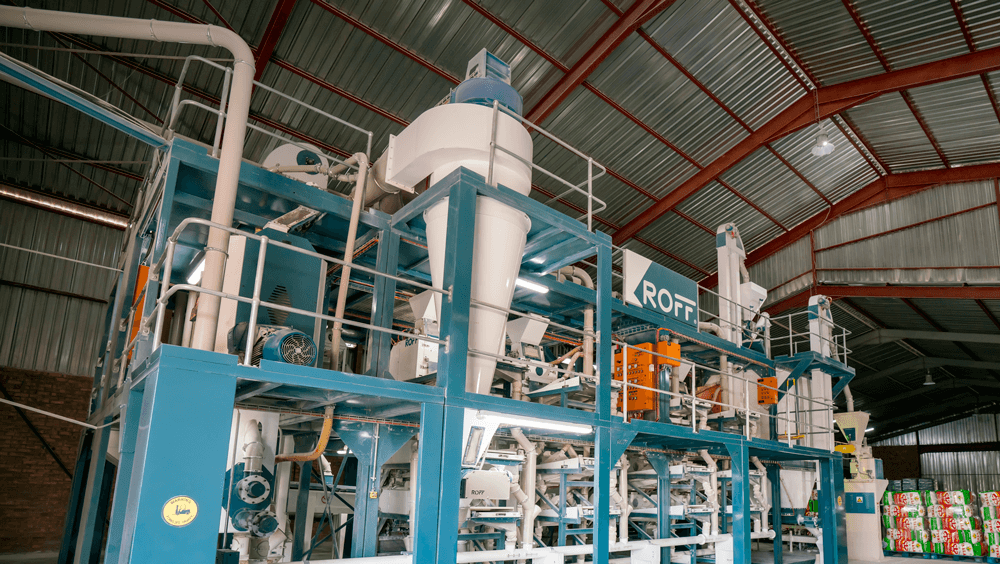
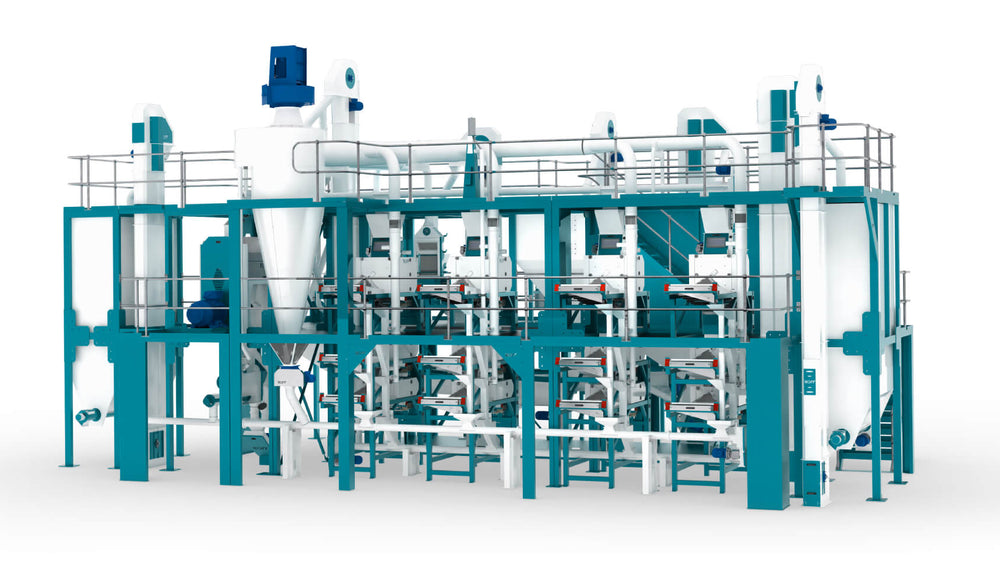
Roff's R-40 Turnkey Maize Mill with a capacity of up to 3 tons per hour
Modernising milling operations can also offer big gains. Investing in advanced roller mills — such as those designed by Roff — allows millers to extract the maximum value from maize, boosting profitability and improving product quality. This not only increases customer satisfaction but helps secure a greater market share. Roff mills also provide the flexibility to supply multiple markets and regions across borders, especially as local supply chains become fragmented or limited. Diversifying your product line — from fortified maize meal to cereals — opens new revenue streams, including opportunities in donor-funded and relief-supported regions where nutritional standards are a key requirement.
Improved trade within Africa holds huge promise. The African Continental Free Trade Area (AfCFTA) offers a framework to remove barriers and connect markets. But realising this potential requires investment in transport and storage infrastructure and better systems for linking smallholder farmers to buyers. Smart logistics, contract farming, and certification programs can all support this.
Finally, enabling policy environments are essential. Governments must support local production over imports, promote public-private partnerships, and expand financial inclusion for farmers and SMEs. Innovative finance models and access to climate funds can empower farmers to adopt new tools and improve resilience.
Africa’s grain future is local
Africa has more than 60% of the world's uncultivated arable land, but remains a net food importer. The convergence of internal conflict, Middle Eastern instability, and supply chain disruptions in 2025-2026 has exposed the fragility of import-dependent food systems. The solution lies in building strong, resilient local systems. That means investing in farmers, empowering millers, modernising infrastructure, developing regional fertiliser production capacity, and encouraging regional trade. Roff Milling stands ready to support this transformation.
Are you ready to future-proof your milling business?
Partner with Roff Milling to upgrade your technology and improve your efficiency. Let’s build a food-secure Africa — one maize mill at a time.
References
Centre for International Policy Studies (CIPS). (2026, March 9). How tensions in the Middle East affect Africa's economy, security, and geopolitics. https://www.cips-cepi.ca/2026/03/09/how-tensions-in-the-middle-east-affect-africas-economy-security-and-geopolitics/
Energy Capital & Power. (2026, March 24). Gulf shipping shock turns Africa's fertilizer dependence into a food security risk. https://energycapitalpower.com/gulf-shipping-shock-turns-africas-fertilizer-dependence-into-a-food-security-risk/
Integrated Food Security Phase Classification (IPC). (2025, November 3). Sudan: Acute Food Insecurity Situation for September 2025 and Projections for October 2025 - January 2026 and for February - May 2026. https://www.ipcinfo.org/ipc-country-analysis/details-map/en/c/1159787/
Integrated Food Security Phase Classification (IPC). (2025, December 19). Gaza Strip: Acute Food Insecurity Situation for 16 October - 30 November 2025 and Projection for 1 December 2025 - 15 April 2026. https://www.ipcinfo.org/ipc-country-analysis/details-map/en/c/1159820/
International Crisis Group. (2026, March 14). Conflict and consequences: The global impact of the new Middle East war. https://www.crisisgroup.org/cmt/middle-east-north-africa/iran-israelpalestine-united-states-global/conflict-and-consequences-global-impact-new-middle-east-war
Bah, A. (2024, June 10). ECOWAS breakup could push up food prices and worsen hunger in West Africa. The Conversation. https://theconversation.com/ecowas-breakup-could-push-up-food-prices-and-worsen-hunger-in-west-africa-249195AfCFTA Secretariat. (n.d.). Official Website. https://afcfta.au.int/African Development Bank (AfDB). (n.d.). Sahel Regional Page. https://www.afdb.org/en/countries/north-africa/sahel
AGRA. (n.d.). Official Website. https://agra.org/
Bah, A. (2024, June 10). ECOWAS breakup could push up food prices and worsen hunger in West Africa. The Conversation. https://theconversation.com/ecowas-breakup-could-push-up-food-prices-and-worsen-hunger-in-west-africa-249195
Bureau for Food and Agricultural Policy (BFAP). (n.d.). Official Website. https://www.bfap.co.za/
CIMMYT. (n.d.). Official Website. https://www.cimmyt.org/
Food and Agriculture Organization of the United Nations (FAO). (2022, April 8). Impact of the war in Ukraine on global food security and FAO’s response. https://www.fao.org/newsroom/detail/impact-of-the-war-in-ukraine-on-global-food-security-and-fao-s-response/en
Food and Agriculture Organization of the United Nations (FAO). (n.d.). Democratic Republic of Congo Emergency Operations. https://www.fao.org/country-profiles/emergency-operations/current-emergencies/drc/en/
Food and Agriculture Organization of the United Nations (FAO). (2023, November 28). Food loss and waste in Africa. https://www.fao.org/food-loss-reduction/news/detail/en/c/1667232/
Global Alliance for Improved Nutrition (GAIN). (n.d.). Official Website. https://www.gainhealth.org/
International Fertilizer Development Center (IFDC). (n.d.). Africa Page. https://ifdc.org/where-we-work/africa/
Intergovernmental Panel on Climate Change (IPCC). (2022). Working Group II – Impacts, Adaptation and Vulnerability. https://www.ipcc.ch/report/ar6/wg2/
OCHA. (n.d.). Horn of Africa Page. https://www.unocha.org/horn-africa
Reuters. (2024, January 29). Red Sea shipping attacks add to Africa grain import costs. https://www.reuters.com/markets/commodities/red-sea-shipping-attacks-add-africa-grain-import-costs-2024-01-29/
UNHCR. (n.d.). Sahel Emergency. https://www.unhcr.org/emergencies/sahel-emergency
World Bank. (n.d.). Africa Region Overview. https://www.worldbank.org/en/region/africa
World Food Programme (WFP). (n.d.). Sudan Country Page. https://www.wfp.org/countries/sudan