Paper is something we all use in our daily lives, although less so now that we’re living in the digital age. But have you ever wondered how it’s made and how wire mesh plays a vital role in this industry?
Basically, a plant is compressed to release fibres. By mixing it with water, a mushy suspension occurs called pulp (or stock). The pulp is then spread over wire mesh so that the fibres knit and bond together; remove the water, and what you’re left with is paper.
Whether you’re making paper by hand or machine, there are essentially two stages to the process: creating pulp and drying it.

Paper making by machine
Pulp is prepared for paper making machines either mechanically or chemically. The mechanical method (or groundwood process) mechanically cuts, washes, chops, beats and blends raw materials into a mushy mass of fibres. Chemical preparation involves the use of chemicals such as sodium sulphide or sodium hydroxide to produce fibres. Other materials are added at this point to either strengthen or dye the paper different colours.
From here, the mixture is turned into paper by a large roller machine such as the Fourdrinier Machine. From pulp to finished roll, the paper passes through eight stages:
- Headbox: This where the pulp starts its journey.
- Wire mesh: Most of the water from the pulp is removed and the paper starts to form.
- Suction boxes: Water drips through the mesh and more is removed by suction boxes.
- Dandy roll: This large roller puts a watermark or texture on the paper.
- Felt belt: The paper runs over a rotating felt belt that removes further moisture.
- Dryer: The paper moves over more felt rollers and heated dryers.
- Calendars: These rollers smooth the paper so it's completely uniform in thickness.
- Paper roll: The end-product is complete.

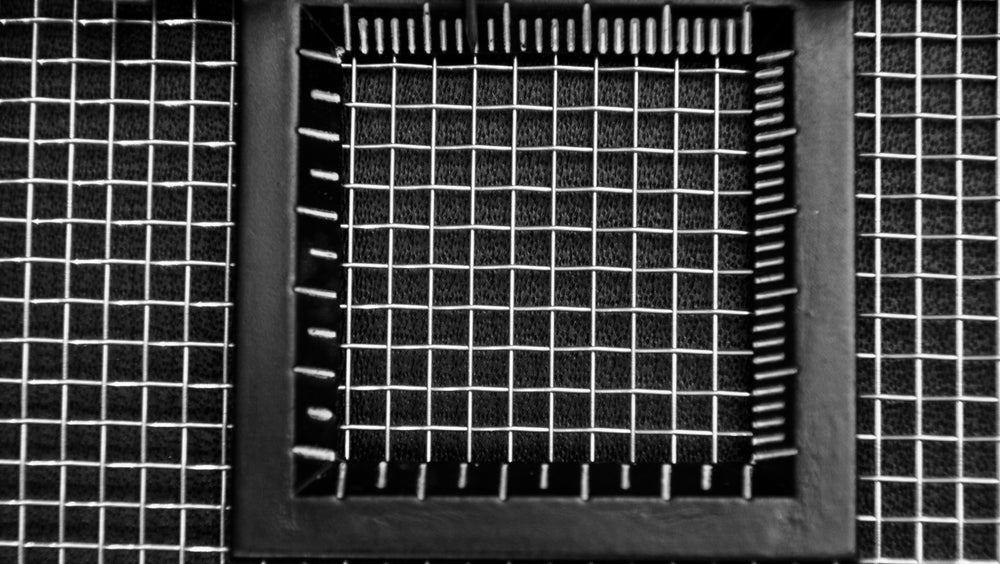
At Roff, we supply a wide range of wire mesh woven from high-quality 304 stainless steel. Corrosion and rust-resistant, stainless steel wire mesh is one of the most durable of all wire meshes. It can be used repeatedly with little need for replacement or maintenance.
Woven stainless steel wire mesh
Stainless steel wire mesh is used in almost all areas of industry, including chemicals, plastics, mechanical engineering, mining and food processing. Roff will help you find the right wire mesh solution for you and your business.