In a service mill the maize arrives in bags and buckets, and every bag belongs to someone who is waiting for it. Each batch goes through the mill on its own, and the queue outside sets the pace of the day. Some customers want their meal back quickly. Others want it as white and fine as the packaged brands on the shop shelf.
Roff makes two roller mills for this kind of milling: the Posho and the MK2S. This article explains how they differ, why that difference matters more than the capacity figure, and how to decide which one belongs in your mill.

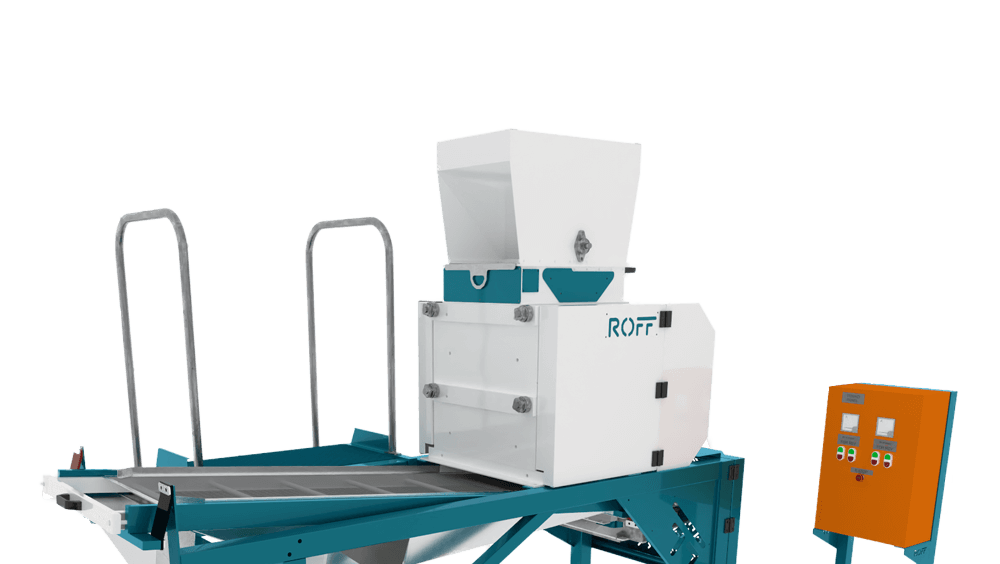
The Roff Posho maize mill

The Roff MK2S roller mill
Why a roller mill for service milling
Large commercial plants remove bran and germ with degerminators before the maize reaches the roller mills. A community mill cannot carry that equipment. A roller mill on its own can still do the job: the rollers break the kernel open and a screen separates the bran from the meal. That is why a compact roller mill can produce sifted maize meal, where a hammer mill on its own grinds the whole kernel into unsifted meal. Meal from a hammer mill also keeps for a shorter time, because the germ is milled in with it and its oil makes the meal spoil sooner.
Both the Posho and the MK2S work this way. Both have two sets of rollers: a first break that opens the kernel and a second break that grinds the endosperm down to meal. The difference is what happens between them.
The one difference that matters: a screen between the breaks
In the Posho the maize passes through the first break and then the second break, and is screened once at the end to separate meal from bran.
In the MK2S there is a screen deck directly after the first break as well. Coarse bran leaves the process there, before the remaining stock goes through the second break. The meal is then screened again.
| Stage | Posho | MK2S |
|---|---|---|
| First break | Breaks the kernel open | Breaks the kernel open |
| After the first break | Straight to the second break | A screen deck removes coarse bran |
| Second break | Grinds to meal | Grinds to meal, with less bran in the stock |
| Final screen | Separates meal and bran | Separates meal and bran |
Why it matters: bran that leaves after the first break never reaches the second break. It cannot be ground finer, so fewer bran specks end up in the meal. That is where the MK2S gets its finer, whiter product. The extra step also makes the process longer, and in service milling that costs time on every batch.
Capacity: the Posho turns batches around faster
The Posho is rated at 750 kg an hour, approximately 6 tons in a normal milling day. The MK2S is rated at 650 kg an hour. On paper that is roughly 15% more, but the reason behind the number matters more than the number itself.
Service milling is not one long run of maize. It is a queue of small batches, and each batch has to clear the mill before the next customer's bag goes in. The shorter process of the Posho means each batch is through sooner, so the turnaround between customers is quicker. Over a day with a busy queue, that is what adds up to the higher capacity.
Bottom line: if the queue is your problem, the Posho clears it faster.
Quality: the MK2S gives a finer, whiter meal
Both mills produce sifted or special maize meal, and their typical extraction ranges overlap: approximately 82 to 85% for the Posho and 80 to 85% for the MK2S, depending on the maize and how it is conditioned. Extraction will not tell you the difference between the two mills. Look at the meal.
Because coarse bran leaves the MK2S before the second break, its meal carries fewer specks and looks whiter. Where customers compare your meal with packaged brands on colour and fineness, that is the difference they will notice.
Bottom line: if your customers judge you on the meal itself, the MK2S gives you the better product.

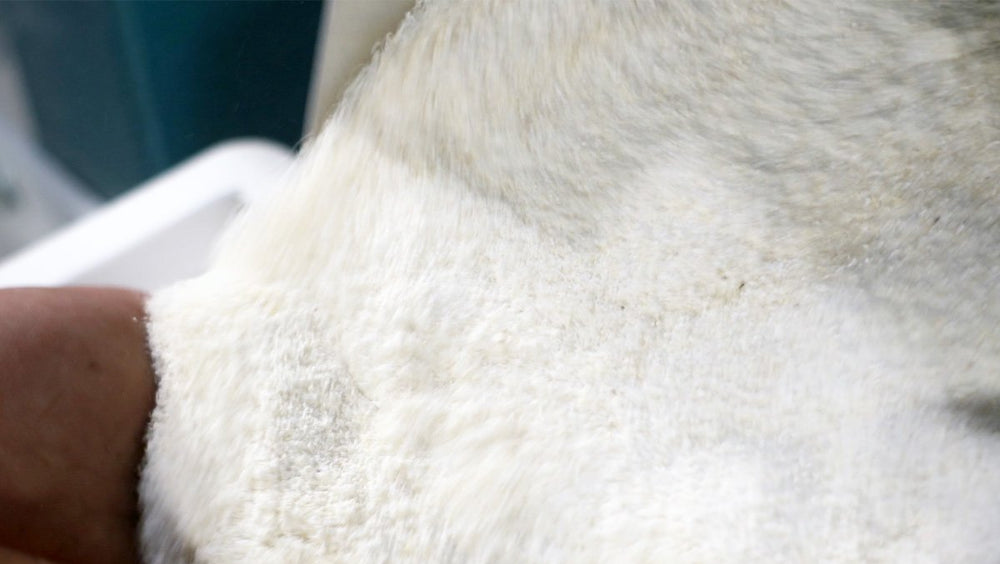
Above: Milled samples of the MK2 (left) and the Posho (Right) with a 5 minute conditioning
The two mills side by side
Figures from Roff's current brochure and product pages, September 2026. Confirm with a Roff consultant before you plan a building or a power supply.
| Posho | MK2S | |
|---|---|---|
| Rated capacity (maize) | 750 kg/h | 650 kg/h |
| Milling process | Two breaks, one screen | Two breaks, a screen after each |
| Typical extraction | 82 to 85%, sifted or special maize meal | 80 to 85%, special maize meal |
| Installed motors | 2 × 5.5 kW, 380 V three-phase | 5.5 kW + 7.5 kW, 380 V three-phase |
| Power supply | 11 kW at 20 A | 13 kW installed |
| Rollers | Four, 450 × 191 mm | Four, 419 × 190 mm |
| Screens | One screen deck | Four stainless steel screens in aluminium frames, two swappable sets |
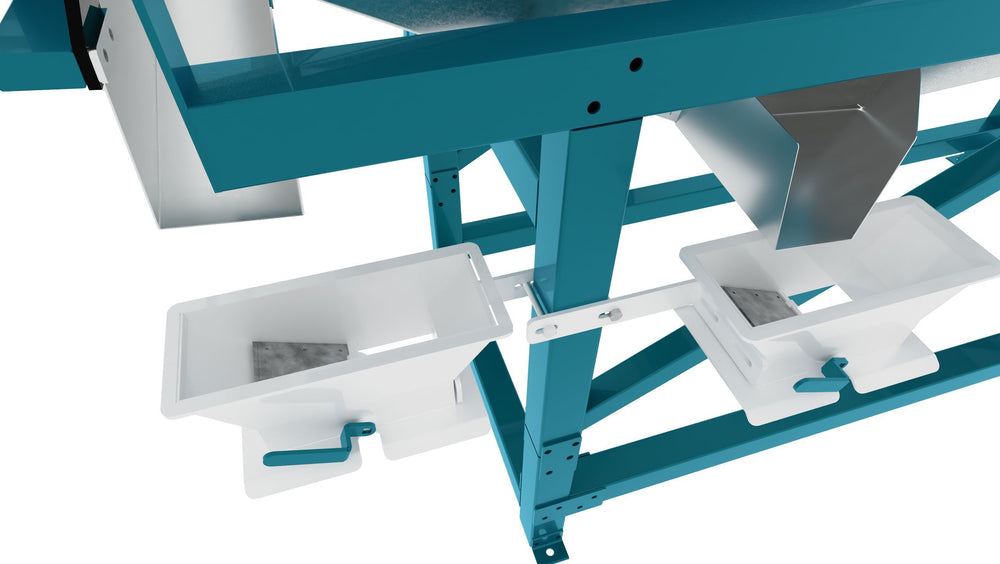
| Outlets | Separate dual bag outlets for meal and for bran | Separate dual bag outlets for meal and for bran |
| Footprint (l × w × h) | 3 m × 2 m × 2.3 m; a single garage is enough | 3 m × 2 m × 2.6 m |
| Also mills | Maize | Maize, barley and malted barley |
On both mills the meal and the bran each have a dual bag outlet: when one bag is full you switch to the empty one without stopping the mill, then hang a fresh bag in its place.
Installed motor power is not the same as what the mill consumes. Both mills need a three-phase 380 V supply, and what you pay for depends on how hard the mill works and for how many hours a day.

Conditioning helps both
Conditioning means adding a controlled amount of water to the maize and letting it rest before milling. It toughens the bran so that it comes off in larger flakes instead of shattering into the meal, which helps either mill separate bran more cleanly. Roff offers an optional 70-litre batch mixer with the Posho for this purpose. Read more in The importance of maize conditioning.
Which one belongs in your mill
Choose the Posho if:
- your customers queue and you sell on turnaround
- the volume you can get through in a day is your constraint
- you want the simplest process to run.
Choose the MK2S if:
- your customers compare your meal with packaged brands on colour and fineness
- you also want to mill barley or malted barley.
Rule of thumb: Koot Jordaan, Roff's sales director, puts it simply. The shorter system gives you quicker throughput and higher capacity. The extra screen deck gives you higher quality.
Both mills are built for community and service milling. If your plan is to pack and sell your own brand of maize meal rather than mill for a fee, that is a different business, and the conversation starts with the SP-1. Read Upgrading from community to commercial milling.
Next step
Tell us where the mill will stand, roughly how many customers you expect in a day and what they say about the meal, and a Roff consultant will recommend the right mill for your community. Both mills are built in Kroonstad, South Africa, and both are stocked, subject to availability, at Roff Milling Zambia, Unit 3, Vibhav Business Park, Chingola Road, Garneton, Kitwe.