
Extensive feedback from Roff clients and the industry has indicated that the debate surrounding hammer mills versus roller mills will be ongoing. However, the end product and its intended purpose should be the determining factor when deciding between the two.
Roff Industries manufactures and supplies both hammer and roller mills of the highest quality to various industries, such as animal feed producers, breweries and even tea producers. Please note that we refer to our roller mills as “crushers”.
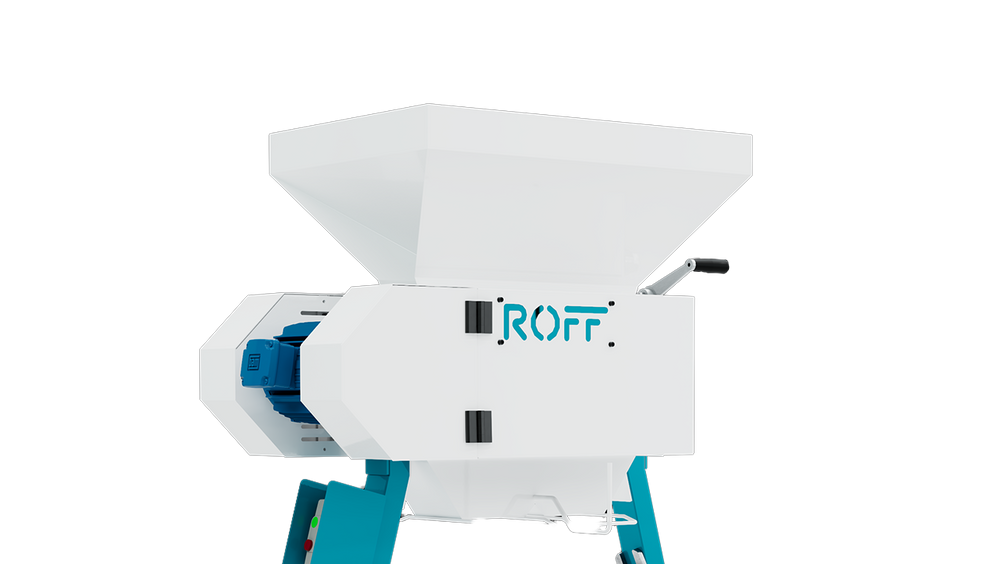
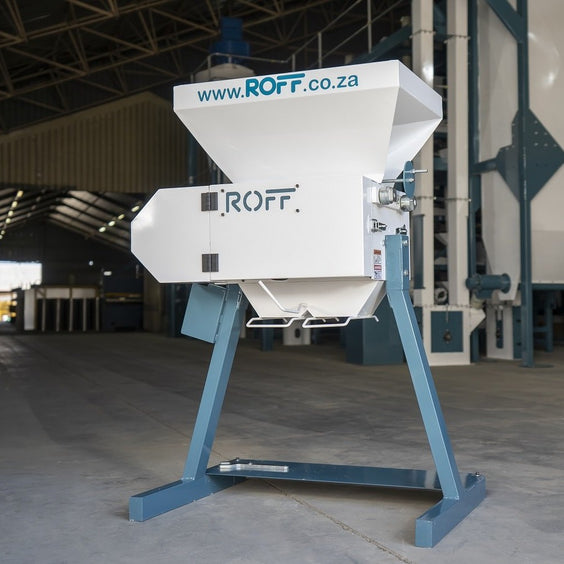
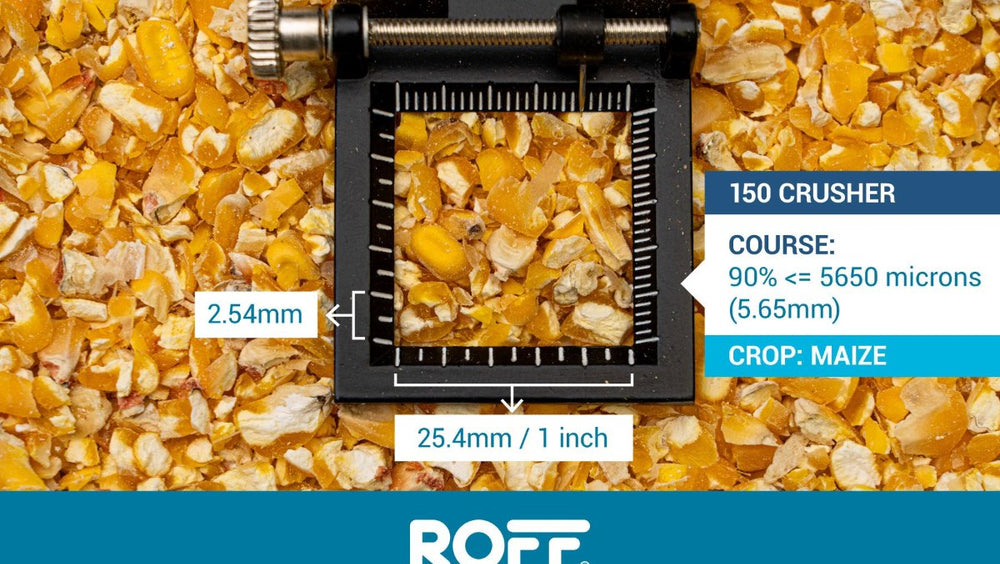
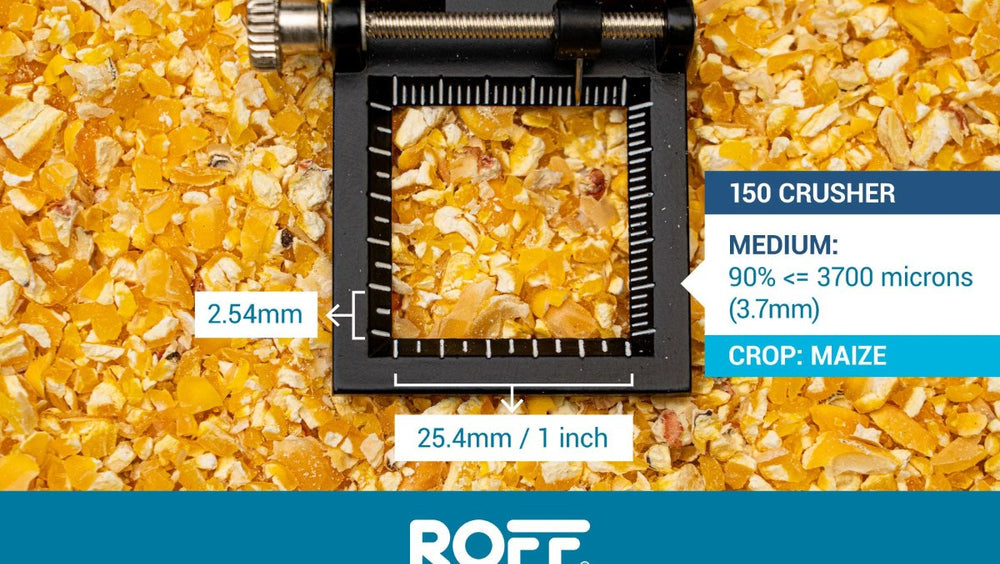
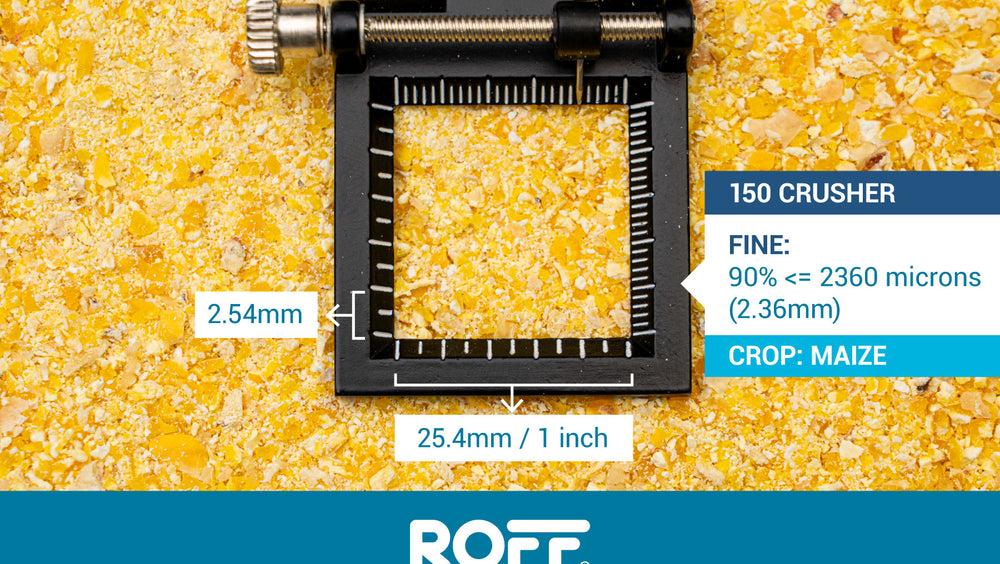
Roff Crusher 150
 Crushers vs Hammer mills
Crushers consist of two grooved (flooted) cylinders that rotate towards each other. The grain is fed into the crusher from above and milled when passed through the gap between the two cylinders. The space between the two cylinders determines the size of the milled product and is adjustable by the operator, making the crusher very adaptable to product size.
The ratio between the cylinders and grooves on the crusher can be determined during the design process to meet the product requirements. When milling with a crusher, the grain is uniform. If, for example, the desired outcome is less than 2 000 microns, setting up the mill correctly, a low percentage of product will be below 500 microns, unlike the product produced by a hammer mill. Crushers are also energy efficient, almost dust free, and even noise levels are generally very acceptable.

Charl Marais, Roff’s Managing Director, says that some feed experts have the perception that crushers should only be used in feed milling to produce product smaller than 2 000 microns.
This perception, however, is incorrect according to Marais: “Start with a coarse grooved crusher and pass the product through a second and finer set of crushers immediately after that. A product of less than 1 000 microns is possible with all the advantages of a crusher such as low capital expenditure for the process, energy efficiency, low maintenance, adjustability on the final product and low dust levels.”
Benefits of crushers
Roff’s crushers are ideal for cracking and crushing hard grains into variable grit sizes. The cylinders are adjustable so farmers or millers can have better control over the size of the grit produced. They’re also durable, and maintenance on crushers generally requires the cylinders to be removed and regrooved when blunt. The crusher is compact and easy to operate, which makes it ideal for use in stock feed plants and dairies, piggeries, feedlots and micro-breweries.

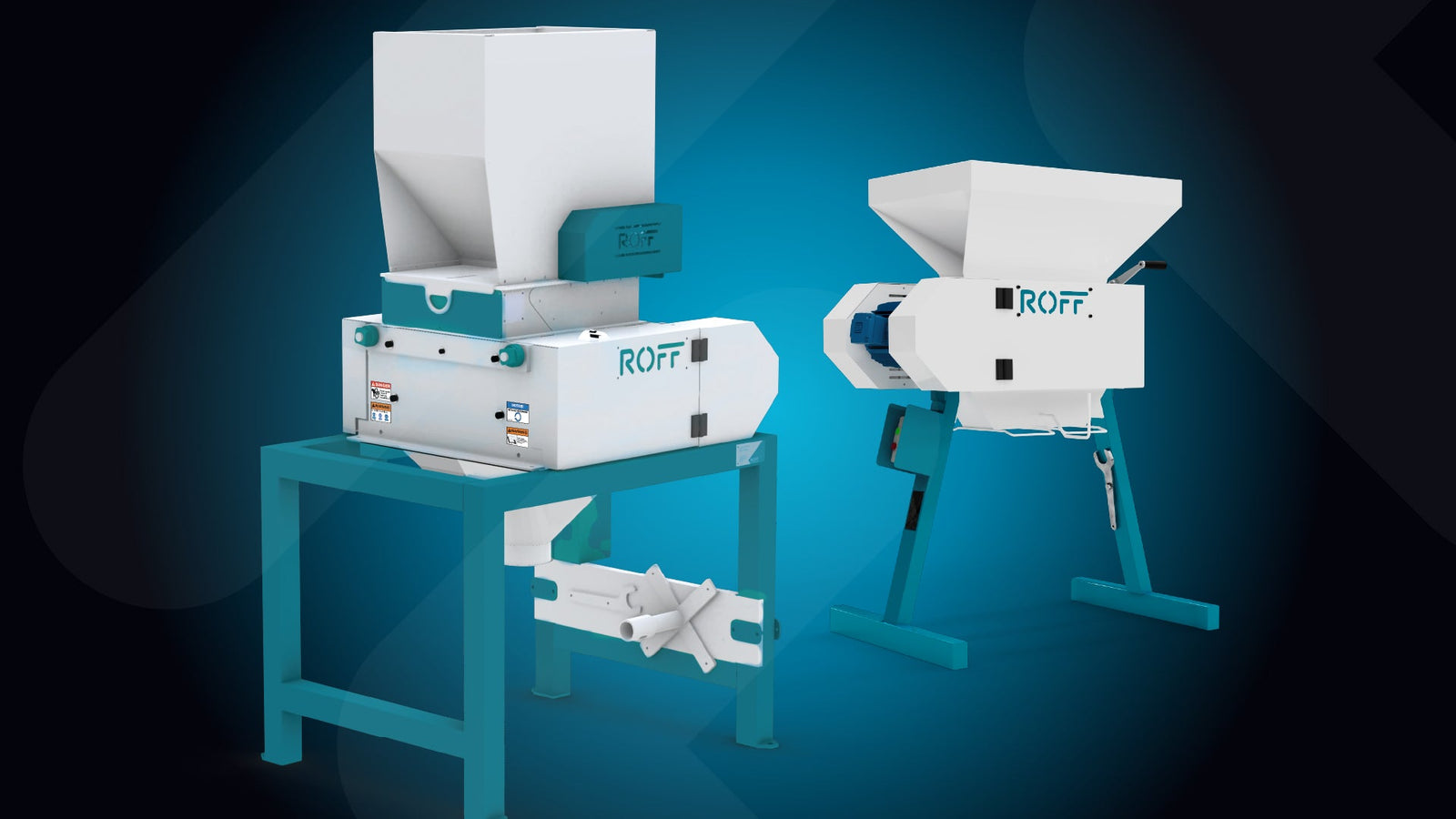
Roff supplies two standard roller mills, the small Roff 150 Crusher, capable of 900kg/h and the larger 419 Crusher that can produce 3 750kg/h. Roff can also build a double high 419 Crusher, ideal for feed experts that require a finer product.

To learn more about ROFF’s range of crushers visit the Roff crusher product page, contact us at sales@roff.co.za or call +27 56 212 2697